How to Choose DTF Transfer Powder
Choose DTF powder as part of a complete transfer system—not as an isolated supply. Your film, ink, adhesive, curing process, garment, and heat-press procedure all need to work together.
Start with the substrate and application requirements, then compare the exact powder products available. Confirm processing instructions before changing materials or starting a production run.
1. Identify the Garment and Intended Use
Gather the fabric details before selecting an adhesive.
Record:
- Fabric composition.
- Garment color.
- Any coating or treatment.
- Expected stretch during wear.
- Intended washing and care conditions.
- Artwork size and coverage.
- Customer-specific performance requirements.
A powder suitable for one cotton T-shirt should not automatically be assumed suitable for a polyester performance garment or a highly elastic blend.
2. Compare Fine-Ground and Standard Powder
This collection includes fine-ground and standard DTF powder options.
Use the product documentation to compare their intended applications, processing requirements, and expected finished characteristics. If you are evaluating fine-ground powder for feel or detail, test it with your actual artwork, film, ink, and fabric.
Do not choose solely from the words “fine” or “standard.” Confirm:
- Intended garment applications.
- Compatibility with your film and ink.
- Suitability for your powder application equipment.
- Curing and pressing instructions.
- Package size.
- Recommended handling and storage.
3. Review ColorPrime Hot Melt Powder for General-Purpose Work
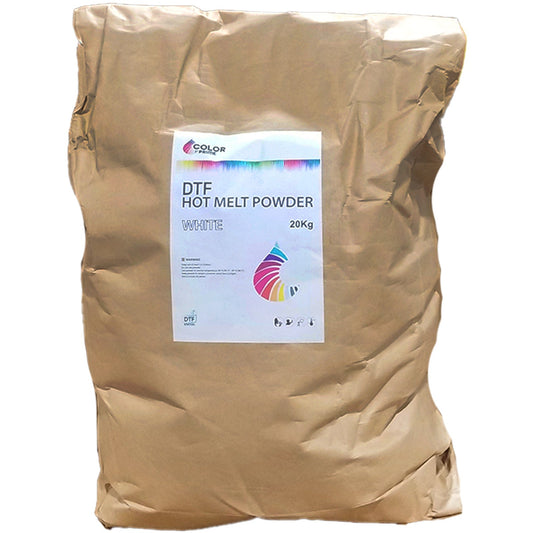
DTF Station ColorPrime Hot Melt Powder is an option to review for everyday DTF transfer production.
Before ordering, confirm the exact product, package size, and instructions for your intended workflow. Do not assume that every ColorPrime adhesive shares the same stretch characteristics or processing requirements.
Provide your film, ink, curing equipment, and garment details when requesting guidance.
4. Review Color Prime Flex for Stretch-Focused Applications
Consider Color Prime Flex when evaluating transfers for sportswear, performance apparel, and other applications where garment stretch is an important selection factor.
Confirm suitability for the exact fabric and finished-product requirements. Evaluate the transfer after application and the recommended care testing rather than assuming a “Flex” designation guarantees a particular result.
Do not confuse Color Prime Flex with the general-purpose ColorPrime Hot Melt Powder. Select the exact product identified in the listing.
5. Evaluate Polyester and Dye-Migration Requirements Separately
If you decorate polyester, camouflage, or other garments with potential color-migration concerns, provide the garment details before choosing a powder.
Do not assume that fine particle size, black color, or a general “performance fabric” description establishes dye-blocking capability.
Request product-specific guidance and test the complete transfer on the actual garment. Assess the result using the supplier’s recommended procedure before committing to production.
6. Match the Powder to Your Film, Ink, and Equipment
Record the exact consumables and equipment in your current setup:
- Printer manufacturer and model.
- Ink brand and family.
- Film product and peel type.
- Existing adhesive powder.
- Manual or automated powder application method.
- Curing equipment.
- Heat press.
- Garment fabric.
If your existing combination works, document its process before making a change. Follow the new powder’s instructions rather than carrying over the previous product’s settings unchanged.
7. Separate Curing Requirements From Heat-Press Settings
Powder curing and garment application are different stages. Do not treat a listed melting range as a complete curing or heat-press recipe.
For the exact powder and transfer system, confirm:
- Powder application procedure.
- Excess-powder removal.
- Curing equipment and process.
- Heat-press temperature, time, and pressure.
- Film-peeling instructions.
- Any additional pressing step.
- Finished-garment care requirements.
If product instructions appear to conflict, request clarification before production. Avoid applying one temperature and time combination across every powder in the collection.
8. Review Handling, Safety, and Storage Instructions
Read the product label, safety data sheet, and equipment instructions before use.
Confirm the requirements for:
- Handling and dispensing.
- Dust control and ventilation.
- Protective equipment.
- Storage conditions.
- Container closure.
- Cleanup and disposal.
- Any restrictions on collecting or reusing excess powder.
Do not assume that a product described as an apparel adhesive requires no handling precautions. Follow the instructions for the exact product and equipment.
9. Test the Finished Transfer
When changing powder, film, ink, or garments, complete the testing recommended by the relevant suppliers.
Evaluate:
- Powder coverage and transfer appearance.
- Release from the carrier.
- Adhesion.
- Finished feel.
- Stretch behavior, where relevant.
- Color migration, where relevant.
- Wash and care performance.
Keep a record of the materials and settings used. A successful test on one garment does not establish suitability for every fabric or application.
10. Compare Package Sizes and Documentation
Before checkout, verify:
- Exact product name.
- Powder type and available variant.
- Package weight.
- Quantity.
- Current purchasing information.
- Applicable return terms.
- Any required technical or certification documentation.
If a customer requires a specific compliance statement, request current documentation for the exact product. Do not assume that a claim on one powder covers every adhesive or finished garment.
Before You Order: DTF Powder Compatibility Checklist
Have these details ready when contacting Lawson Workhorse Group:
- Garment: Fabric composition, color, and intended use.
- Printer: Manufacturer and full model name.
- Ink: Brand and product family.
- Film: Product name, dimensions, and peel instructions.
- Current powder: Exact product and package label.
- Equipment: Powder application, curing, and heat-press equipment.
- Required performance: Stretch, feel, washing, or migration concerns.
- Product of interest: Listing name or link.
- Package size: Required weight and quantity.
- Documentation: Any customer-specific technical or compliance requirements.
Get Help Choosing DTF Adhesive Powder
Contact Lawson Workhorse Group with your garment, consumables, equipment, and production requirements. Include the powder you currently use and the product you are considering.
Confirm compatibility and obtain the appropriate processing instructions before changing adhesives or placing a production-sized order.
Request DTF Powder Selection Help

 SaleVendor:Lawson Workhorse Group (LWG)
 SaleVendor:Lawson Workhorse Group (LWG)
 SaleVendor:DTF Station
 Vendor:DTF Station


