


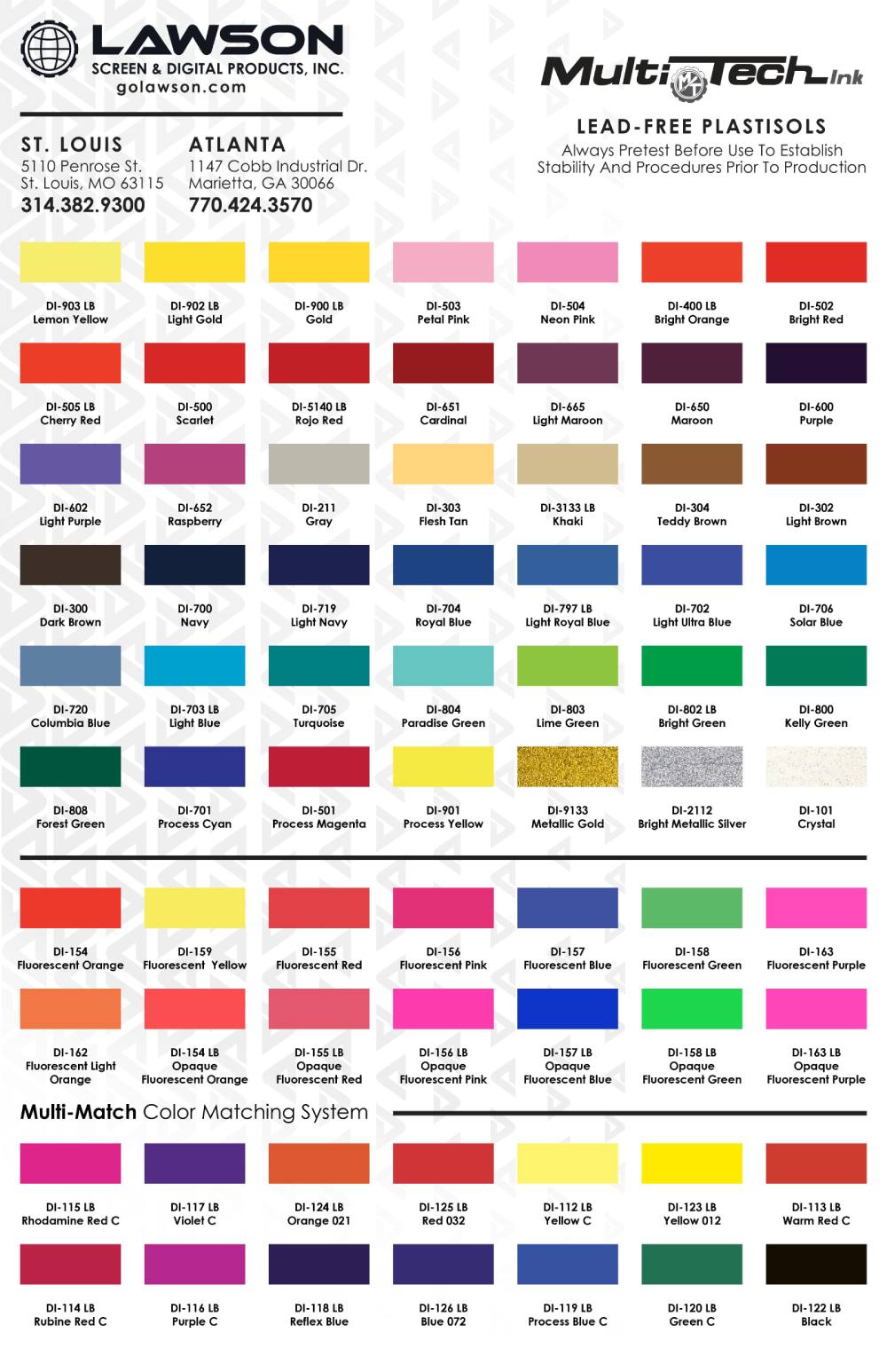
Bright Orange DI - 400 LB
Bright Orange DI - 400 LB
Couldn't load pickup availability
Payment & Security

Your payment information is processed securely. We do not store credit card details nor have access to your credit card information.


- DESCRIPTION
- REVIEWS
Bright Orange DI-400 LB Low-Bleed, Low-Cure Plastisol Ink (Pantone 172C)
Dynamic Ink Bright Orange DI-400 LB (Pantone 172C) is a premier plastisol screen printing ink, offering excellent opacity and bleed resistance on polyester, 50/50 blends, and other fabrics. This low-cure ink, curing at 270–280°F, helps eliminate dye migration on even the most challenging “bleeder” fabrics.
All Dynamic Ink flashes quickly, enabling faster production when printing a white underbase. You can use print-flash-print or wet-on-wet techniques, depending on your screen printing job.
All inks in the Dynamic Series are non-phthalate and lead-free, offering vibrant colors and a creamy, press-ready consistency straight from the bucket. The high opacity ensures better prints with a soft hand feel.
Curing Instructions: Flash at approximately 220°F for 3–5 seconds and cure at 270–280°F.
Clean-Up and On-Press Color Changes: Use a press wash for on-press color changes and an ink degradant for ink removal. The stencil can be saved, or the entire screen printing frame can be reclaimed.
Storage Information: Store at room temperature, avoiding direct sunlight. Use within one year of the manufacturing date.
Features & Tips for Optimal Results
Finish: Semi-Gloss
Stencils: All types of direct emulsion or capillary film can be used
Opacity: Opaque
Wash-Up: Use Thinner DT or any conventional plastisol wash-up system
Bleed Resistance: Excellent, ideal for all polyester
Storage: Store in a relatively cool area. Keep away from extreme heat and direct sun exposure. Store below 95°F.
Ink Build-Up on Screen: Minimal
Mileage: Excellent, approximately 800–1,750 sq. ft. per gallon
Drying: 270–280°F
Fabrics: All types. For soft-hand coverage, use 196 to 305 monofilament
Always pretest before use to establish suitability and procedures prior to production.
Stir plastisols prior to each use. Do not dry clean, use bleach, or iron directly.
Technical FAQ: Choosing the Right Screen Printing Mesh Count
What mesh count is best for printing glitter and shimmer inks?
Use a low mesh count between 24 and 86 for glitter and shimmer inks. Larger glitter flakes require very open meshes such as 24/25, 38/40, or 60/61 to allow particles to pass through without clogging. For finer shimmer inks or foil adhesives, an 85/86 mesh provides better control while still allowing adequate ink flow.
Why is 110 mesh commonly used in garment screen printing?
A 110 mesh count is widely used because it delivers a heavy ink deposit, making it ideal for bold graphics, block text, and high-viscosity plastisol inks. It is especially effective for white underbases, allowing printers to achieve strong opacity in a single pass and improve production efficiency.
What mesh count should I use for thick white plastisol ink?
A 125 mesh count is a strong choice for thick white plastisol inks. It balances ink flow and detail, offering slightly finer resolution than 110 mesh while still maintaining enough openness to prevent clogging or poor ink release.
What is the best all-purpose mesh count for t-shirt printing?
A 156/160 mesh count is considered the best general-purpose option for screen printing on garments. It works well with both plastisol and water-based inks, providing good detail retention while maintaining consistent ink coverage across most designs.
How can I achieve a soft-hand feel when printing with plastisol ink?
To create a softer print with plastisol ink, use a higher mesh count such as 196/200. This reduces the amount of ink deposited on the garment, resulting in a lighter, smoother feel. Keep in mind that higher mesh counts may reduce opacity, making this approach best for lighter fabrics or fashion prints.
What mesh count is ideal for halftones and fine detail printing?
A 230 mesh count is ideal for halftones, fine lines, and detailed artwork. It allows for precise stencil definition and clean ink transfer. For very fine detail or thinner inks, a 280 mesh count can further improve sharpness and control.
When should I use a 305 mesh screen for screen printing?
A 305 mesh count is best for ultra-fine detail, including small halftone dots, CMYK process printing, and simulated process designs. The higher thread count ensures accurate dot reproduction and prevents distortion, resulting in sharper, more professional prints.