


TrueVIS TR2 Ink
TrueVIS TR2 Ink
Couldn't load pickup availability
Payment & Security

Your payment information is processed securely. We do not store credit card details nor have access to your credit card information.

- DESCRIPTION
- REVIEWS
When Color Matters Use Roland TrueVIS TR2 Inks
Roland TrueVIS TR2 Inks were designed to advance printing color technology with the TrueVIS VG2 Large-Format Inkjet Printer/Cutter series. Crank out thousands of posters, produce prints on specialty materials, or create vehicle graphics with exact brand colors to meet the exacting standards of both you and your clients.
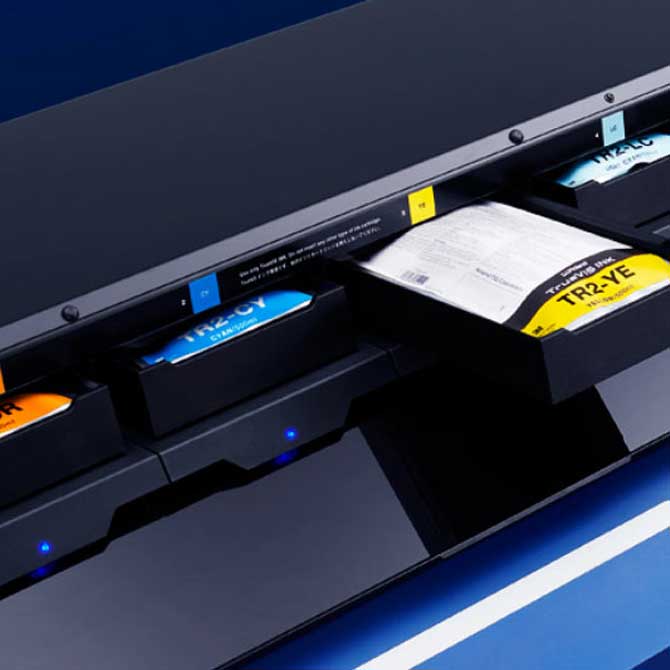
Convenient 500ml pouches fit neatly into reusable cartridges, sliding into a hidden ink bay for a clean ink operation that creates less waste. GREENGUARD Gold certified TR2 ink is virtually odorless and requires no special ventilation or environmental equipment. It’s also durable, scratch resistant, and offers low-running-cost ink production without sacrificing color or image quality.
With three different configurations in CMYK, plus additional Light Cyan, Light Magenta, Light Black, White or Orange ink, you can develop your color output like never before. True Rich Color combines neutral grays, smooth gradations, and natural skin tones to produce color quality of incomparable realism and complexity.

The Power of Orange
The inclusion of Orange ink makes TR2 ink a powerful new graphics tool for your business. By adding Orange ink to the print process, you can reproduce specific oranges and reds for logos and branding— adding around 130 new spot colors in the Roland Color Library for VersaWorks 6 RIP Software.
Technical FAQ: Choosing the Right Screen Printing Mesh Count
What mesh count is best for printing glitter and shimmer inks?
Use a low mesh count between 24 and 86 for glitter and shimmer inks. Larger glitter flakes require very open meshes such as 24/25, 38/40, or 60/61 to allow particles to pass through without clogging. For finer shimmer inks or foil adhesives, an 85/86 mesh provides better control while still allowing adequate ink flow.
Why is 110 mesh commonly used in garment screen printing?
A 110 mesh count is widely used because it delivers a heavy ink deposit, making it ideal for bold graphics, block text, and high-viscosity plastisol inks. It is especially effective for white underbases, allowing printers to achieve strong opacity in a single pass and improve production efficiency.
What mesh count should I use for thick white plastisol ink?
A 125 mesh count is a strong choice for thick white plastisol inks. It balances ink flow and detail, offering slightly finer resolution than 110 mesh while still maintaining enough openness to prevent clogging or poor ink release.
What is the best all-purpose mesh count for t-shirt printing?
A 156/160 mesh count is considered the best general-purpose option for screen printing on garments. It works well with both plastisol and water-based inks, providing good detail retention while maintaining consistent ink coverage across most designs.
How can I achieve a soft-hand feel when printing with plastisol ink?
To create a softer print with plastisol ink, use a higher mesh count such as 196/200. This reduces the amount of ink deposited on the garment, resulting in a lighter, smoother feel. Keep in mind that higher mesh counts may reduce opacity, making this approach best for lighter fabrics or fashion prints.
What mesh count is ideal for halftones and fine detail printing?
A 230 mesh count is ideal for halftones, fine lines, and detailed artwork. It allows for precise stencil definition and clean ink transfer. For very fine detail or thinner inks, a 280 mesh count can further improve sharpness and control.
When should I use a 305 mesh screen for screen printing?
A 305 mesh count is best for ultra-fine detail, including small halftone dots, CMYK process printing, and simulated process designs. The higher thread count ensures accurate dot reproduction and prevents distortion, resulting in sharper, more professional prints.