Skip to product information
1 of 1

Auto Release Pop-Up Upgrade for DK20 & DK16 Heat Presses

Auto Release Pop-Up Upgrade for DK20 & DK16 Heat Presses

Geo. Knight

SKU:

Regular price $375.00 USD
Regular price $0.00 USD Sale price $375.00 USD
Sale Sold out

Shipping Fees Not Included in Price

Shipping and Crating fees (if applicable) are not included in price shown and will not be reflected in your order total. Lawson will contact you after order completion with a shipping cost.

Payment & Security

Payment Methods Accepted

Your payment information is processed securely. We do not store credit card details nor have access to your credit card information.
Shipping, Crating, and Packaging Fees

Additional Shipping & Crating Fees

Lawson made equipment comes with a Shipping and Crating Charge that is not included in the price shown and will not be reflected in your order's total. We will contact you after order completion with a final cost.

Download Product's PDF Brochure

Financing Options

Need to finance the Auto Release Pop-Up Upgrade for DK20 & DK16 Heat Presses? No problem! Visit our Financing Page for more details.

Got a question about this product?

View full details
  • DESCRIPTION
  • REVIEWS

DK20 Auto Pop Heat Transfer Press

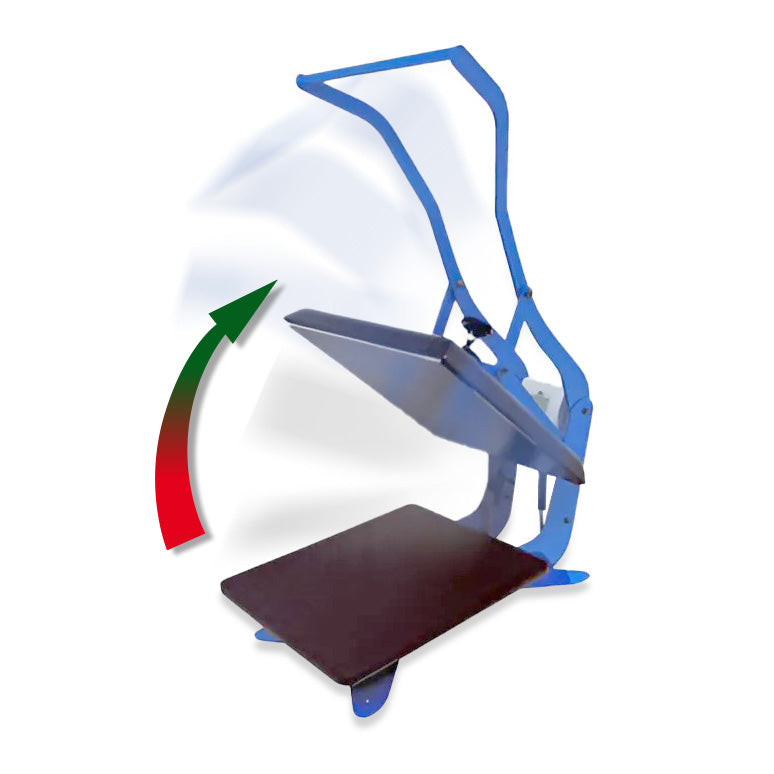
Auto-Release Pop-Up Upgrade Available for the DK20 and DK16 is our new automatic release feature. This amazing high-tech upgrade makes your Digital Knight clamshell act like a semi-automatic, air-operated press, without the compressor! Simply close the press as you normally do and at the end of the digital timing cycle the press releases automatically.

  • The DK20 print area is 16 x 20
  • The DK16 print area is 14 x 16

This upgrade is factory installed at no additional charge when purchased with the DK16 or DK20. However, for a pre-existing press, customer installation can be done. (press NOT included)

  • Electromagnetic assist lockdown and auto-release design.
  • An excellent feature for sensitive transfer applications and longer dwell times that need precise timing & release.
  • Can work in tandem with the DK20 twin shuttle upgrade for a twin table, auto release, and super-system!
  • The dual gas shocks open the press safely and in a controlled, smooth, hydraulic motion... Unlike other models that unsafely fly open under fast mechanical spring tension.

This upgrade may not be available, depending on the age and style of your press. Please contact us with questions.  

*Shipping Charges Are Not Included In the Price Shown & Will NOT Be Reflected In Your Order's Total -- Quote on Request

Technical FAQ: Choosing the Right Screen Printing Mesh Count

What mesh count is best for printing glitter and shimmer inks?

Use a low mesh count between 24 and 86 for glitter and shimmer inks. Larger glitter flakes require very open meshes such as 24/25, 38/40, or 60/61 to allow particles to pass through without clogging. For finer shimmer inks or foil adhesives, an 85/86 mesh provides better control while still allowing adequate ink flow.

Why is 110 mesh commonly used in garment screen printing?

A 110 mesh count is widely used because it delivers a heavy ink deposit, making it ideal for bold graphics, block text, and high-viscosity plastisol inks. It is especially effective for white underbases, allowing printers to achieve strong opacity in a single pass and improve production efficiency.

What mesh count should I use for thick white plastisol ink?

A 125 mesh count is a strong choice for thick white plastisol inks. It balances ink flow and detail, offering slightly finer resolution than 110 mesh while still maintaining enough openness to prevent clogging or poor ink release.

What is the best all-purpose mesh count for t-shirt printing?

A 156/160 mesh count is considered the best general-purpose option for screen printing on garments. It works well with both plastisol and water-based inks, providing good detail retention while maintaining consistent ink coverage across most designs.

How can I achieve a soft-hand feel when printing with plastisol ink?

To create a softer print with plastisol ink, use a higher mesh count such as 196/200. This reduces the amount of ink deposited on the garment, resulting in a lighter, smoother feel. Keep in mind that higher mesh counts may reduce opacity, making this approach best for lighter fabrics or fashion prints.

What mesh count is ideal for halftones and fine detail printing?

A 230 mesh count is ideal for halftones, fine lines, and detailed artwork. It allows for precise stencil definition and clean ink transfer. For very fine detail or thinner inks, a 280 mesh count can further improve sharpness and control.

 When should I use a 305 mesh screen for screen printing?

A 305 mesh count is best for ultra-fine detail, including small halftone dots, CMYK process printing, and simulated process designs. The higher thread count ensures accurate dot reproduction and prevents distortion, resulting in sharper, more professional prints.