

Geo Knight Universal DKA Floor Stand w/Casters
Geo Knight Universal DKA Floor Stand w/Casters
Shipping Fees Not Included in Price
Shipping and Crating fees (if applicable) are not included in price shown and will not be reflected in your order total. Lawson will contact you after order completion with a shipping cost.
Couldn't load pickup availability
Payment & Security

Your payment information is processed securely. We do not store credit card details nor have access to your credit card information.
- DESCRIPTION
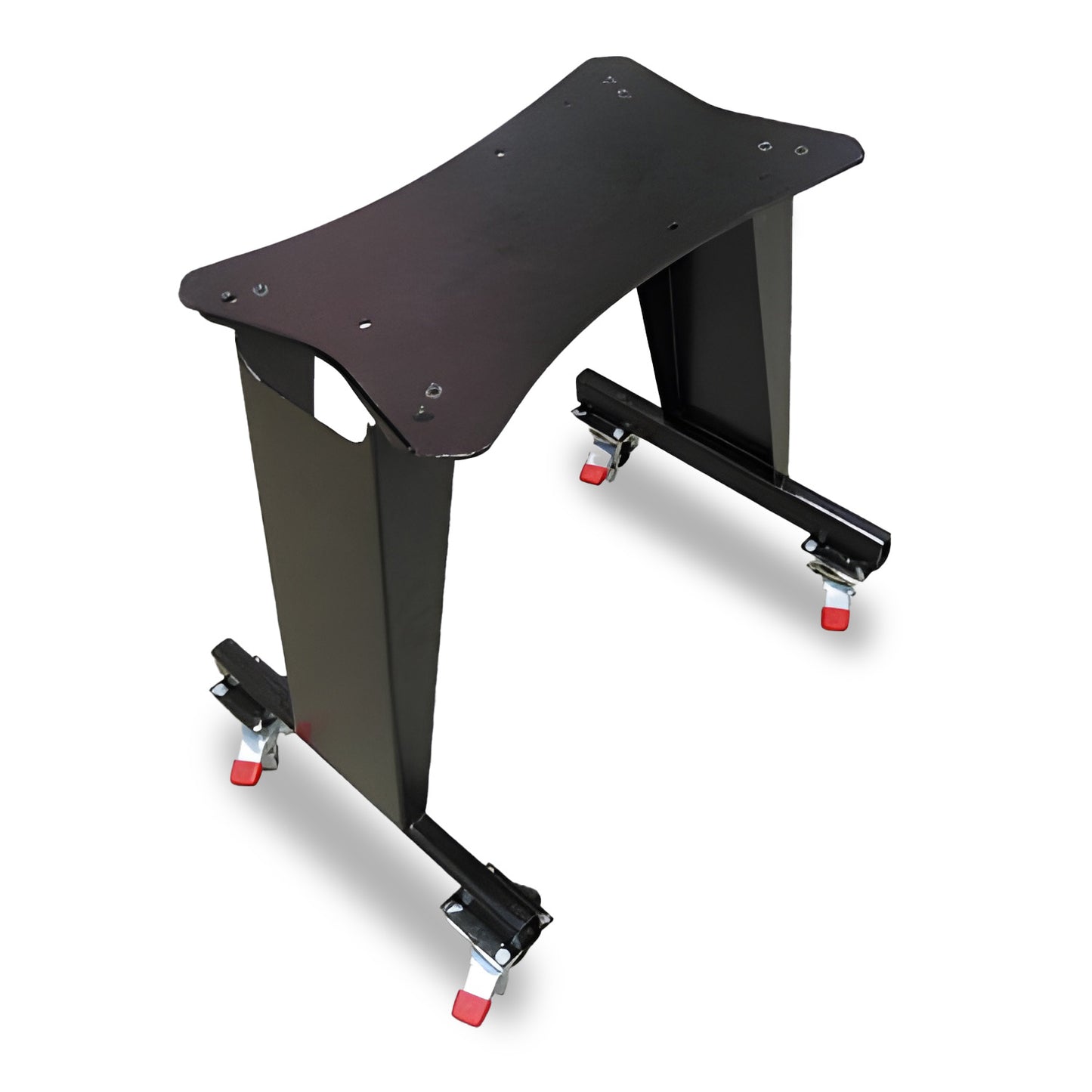
Are you looking to free up valuable counter space and add seamless mobility to your garment customization department? The Geo Knight Universal Stand w/ Casters (Model DKA-STAND) is an industrial-strength, commercial floor stand engineered by Geo. Knight & Co. Specifically built to support heavy-duty flatbed and combo machinery, this USA-made rolling pedestal safely elevates your investment to a comfortable, ergonomic working height while giving you the flexibility to rearrange your layout instantly.
The core structural advantage of the Digital Knight Universal Stand lies in its rugged construction and rock-solid stability. Fabricated from heavy-duty, welded solid steel framework, this stand is engineered to handle the intense physical torque and down-force pressures generated by manual and automatic presses. To guarantee maximum shop safety, the stand is outfitted with premium, industrial-grade rolling casters equipped with convenient foot pedal locks. When engaged, the pedals prevent both wheel pivoting and rolling, ensuring your press remains anchored and wobble-free during high-pressure application runs. It acts as a perfect space-saving workspace addition for running DTF transfers, screen printed transfers, heat transfer vinyl (HTV), and sublimation lines.
Shipping compactly via UPS and assembling quickly with all hardware included, this heavy steel workstation is the ultimate utility upgrade for both storefront boutiques and high-volume print facilities.
📍 Local Pickup Available: Skip the shipping fees! In-store local pickup is available at our St. Louis, MO (HQ) and Atlanta / Marietta, GA hubs. If the item is in stock, your order can be ready in as little as 1 hour—simply check local availability or contact us to confirm before heading over.
- Choosing a selection results in a full page refresh.
- Opens in a new window.