


LED-5000 Screen Printing Exposure Unit
LED-5000 Screen Printing Exposure Unit
Shipping Fees Not Included in Price
Shipping and Crating fees (if applicable) are not included in price shown and will not be reflected in your order total. Lawson will contact you after order completion with a shipping cost.
Couldn't load pickup availability
Payment & Security

Your payment information is processed securely. We do not store credit card details nor have access to your credit card information.

- DESCRIPTION
- Features
- Specifications
- Videos
- Diagram
- REVIEWS
A High Quality Exposure Unit with Programmable Touchscreen
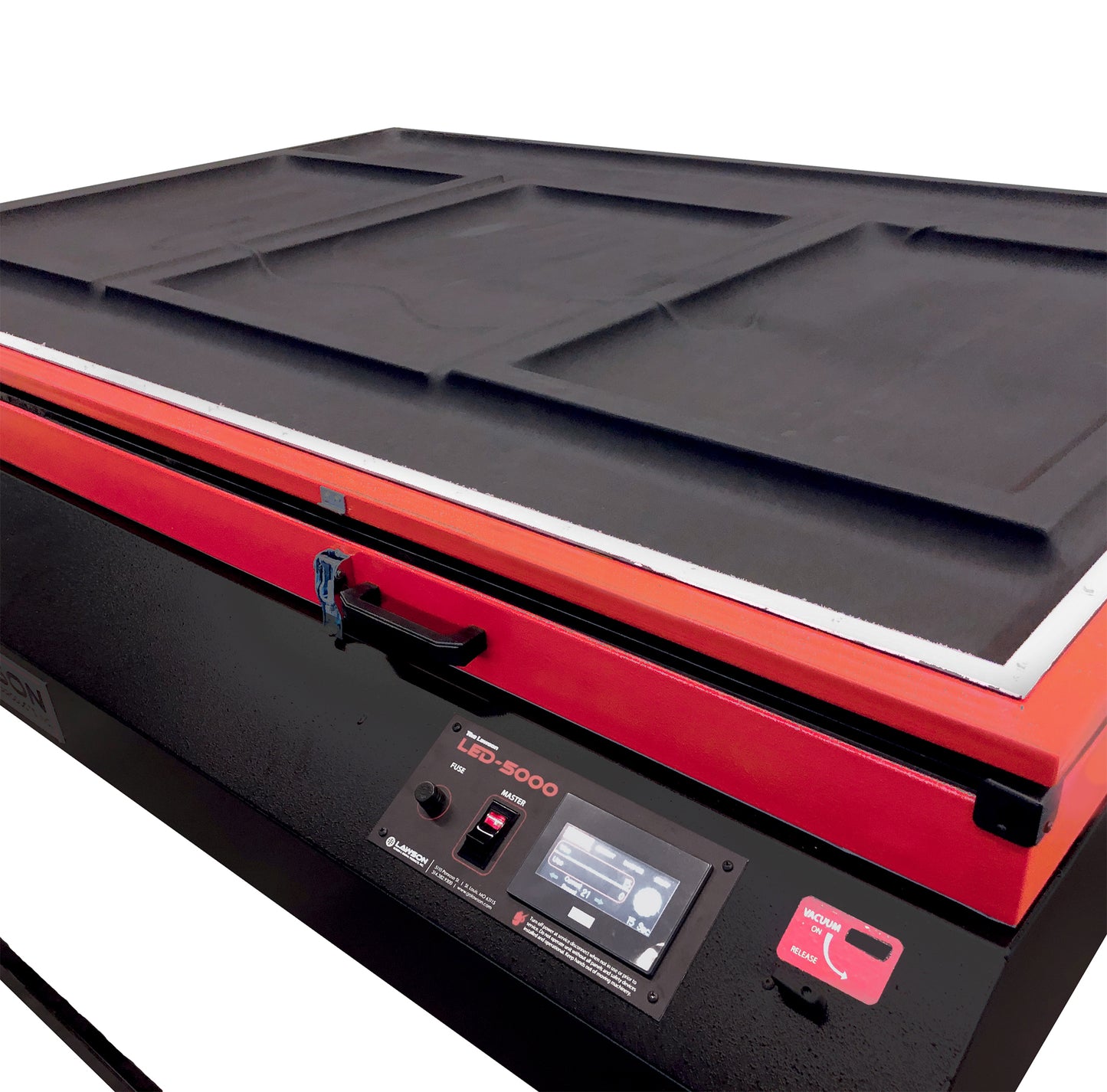
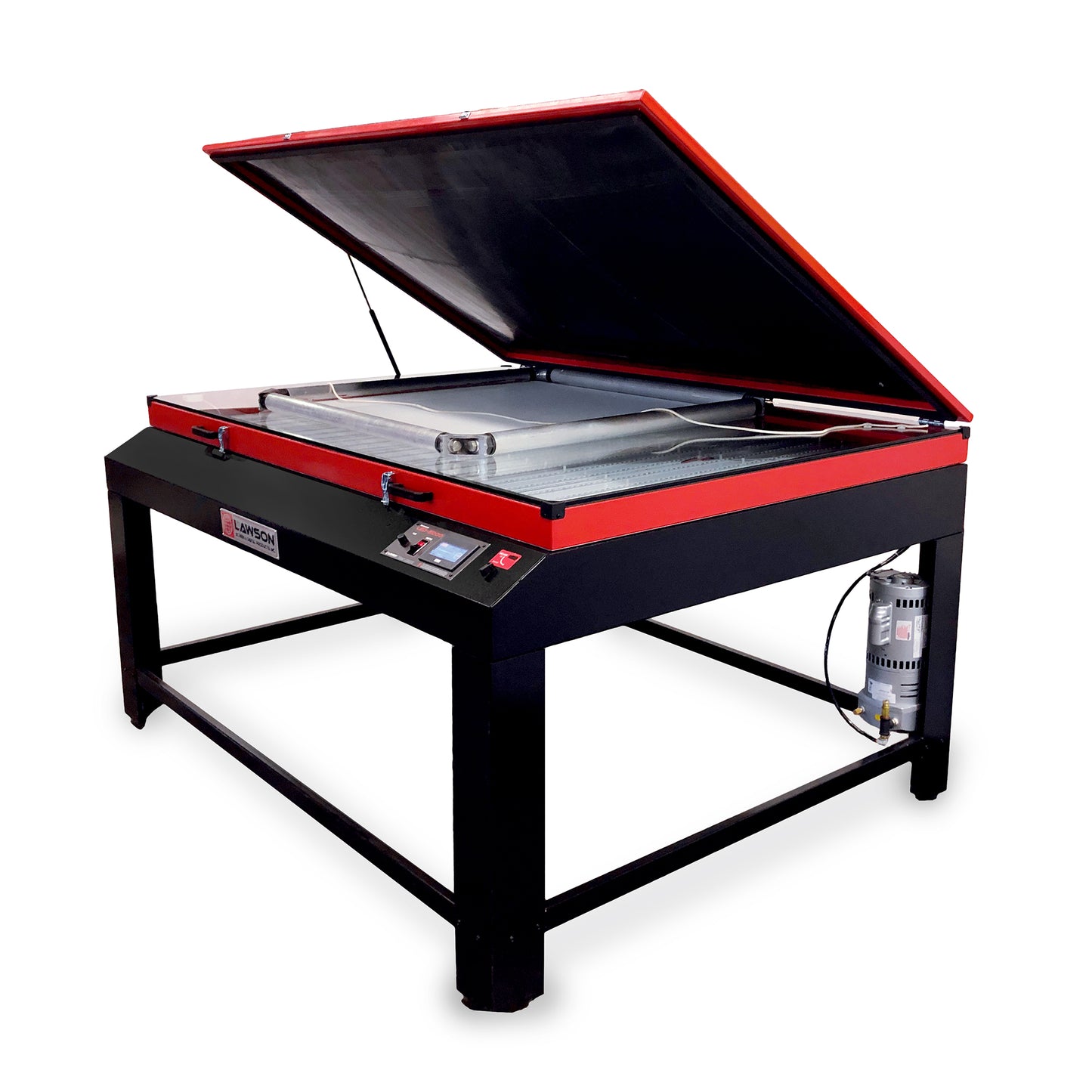
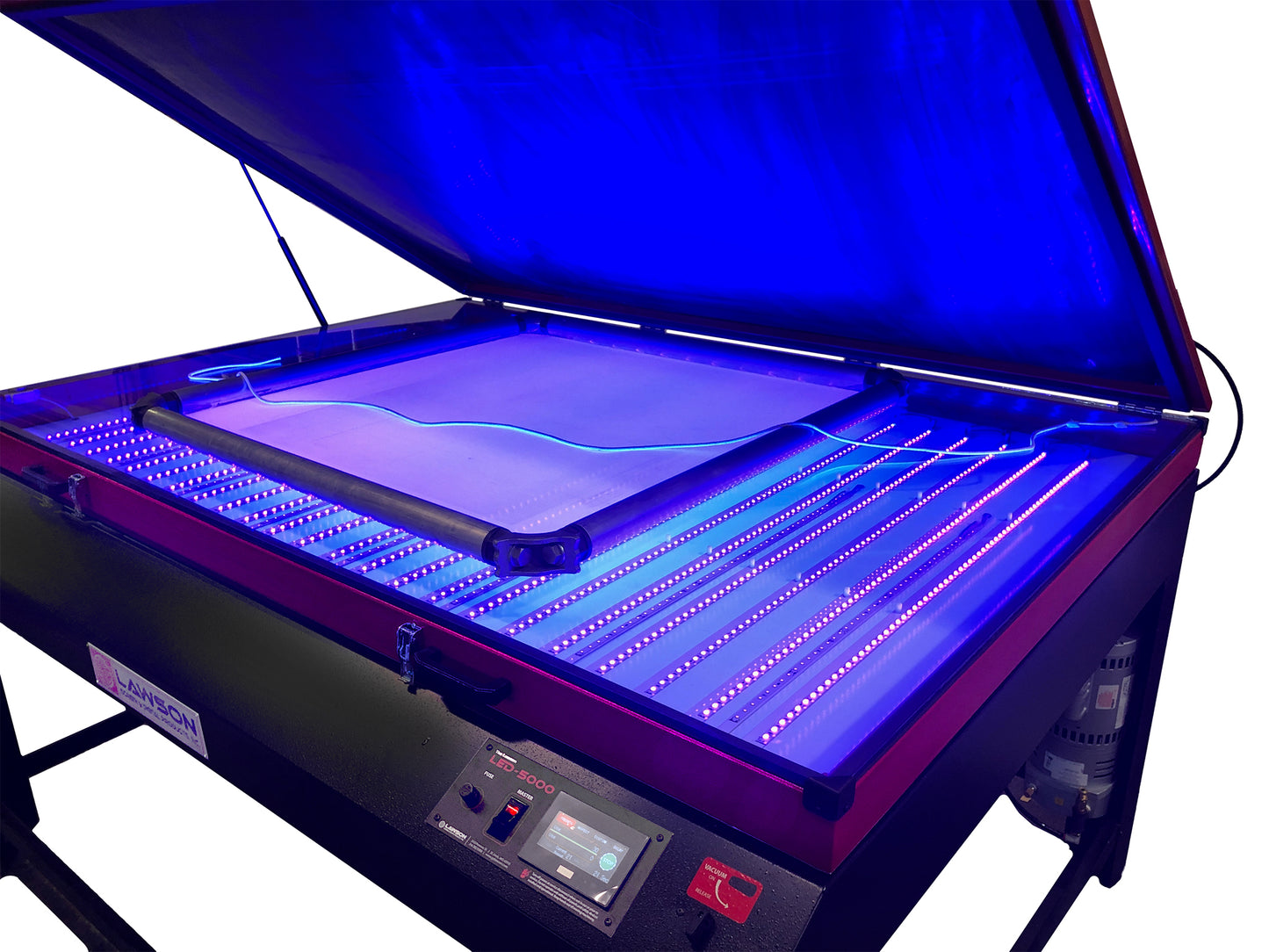
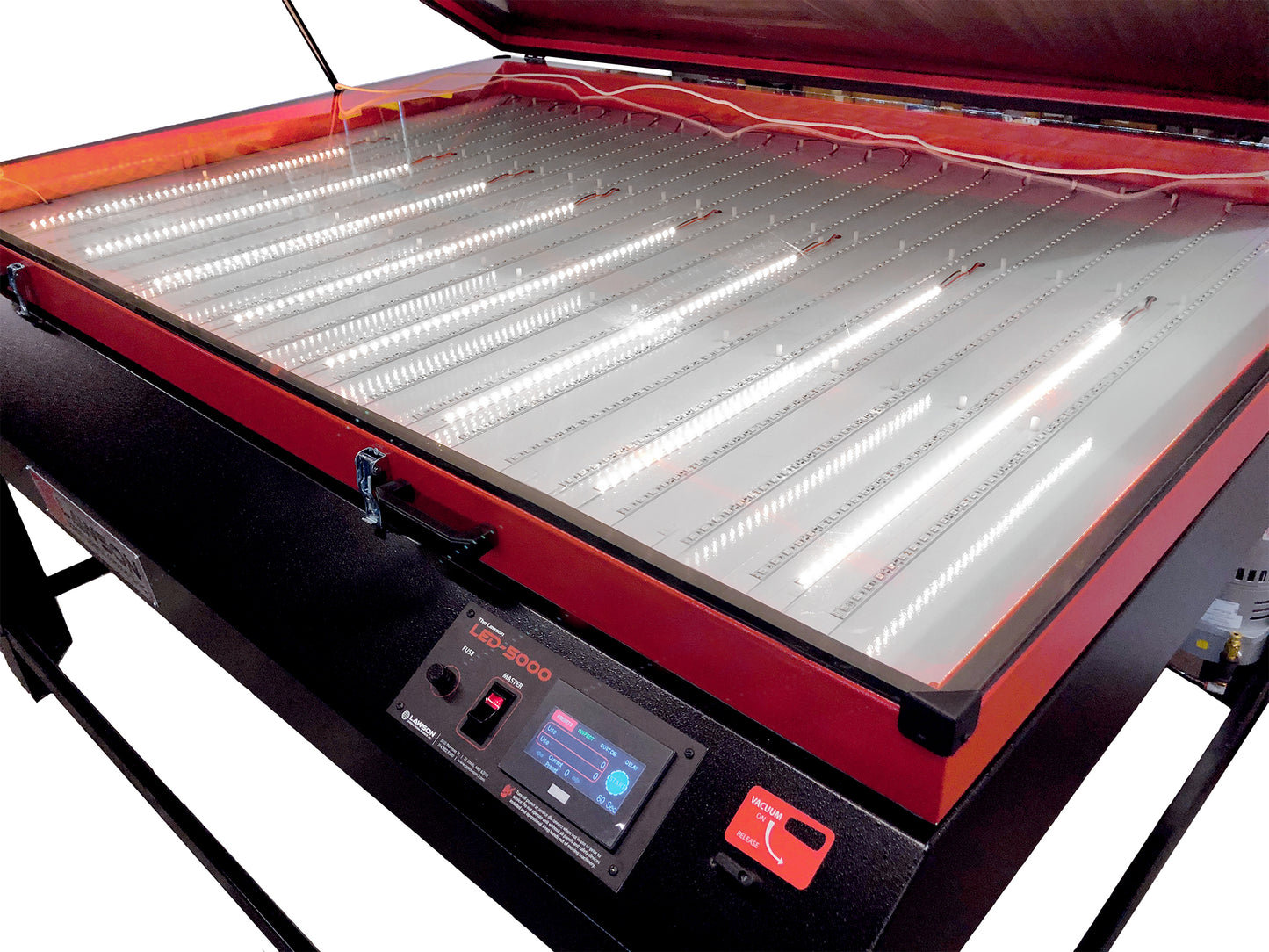
The Lawson LED-500 it is a high-quality, user-friendly screen printing exposure unit that offers fast, consistent exposure. The optimal balanced LED light technology provides excellent resolution and sharp edge definition while being significantly more energy efficient and cost-effective, making it a great choice for both beginners and professional screen printers.
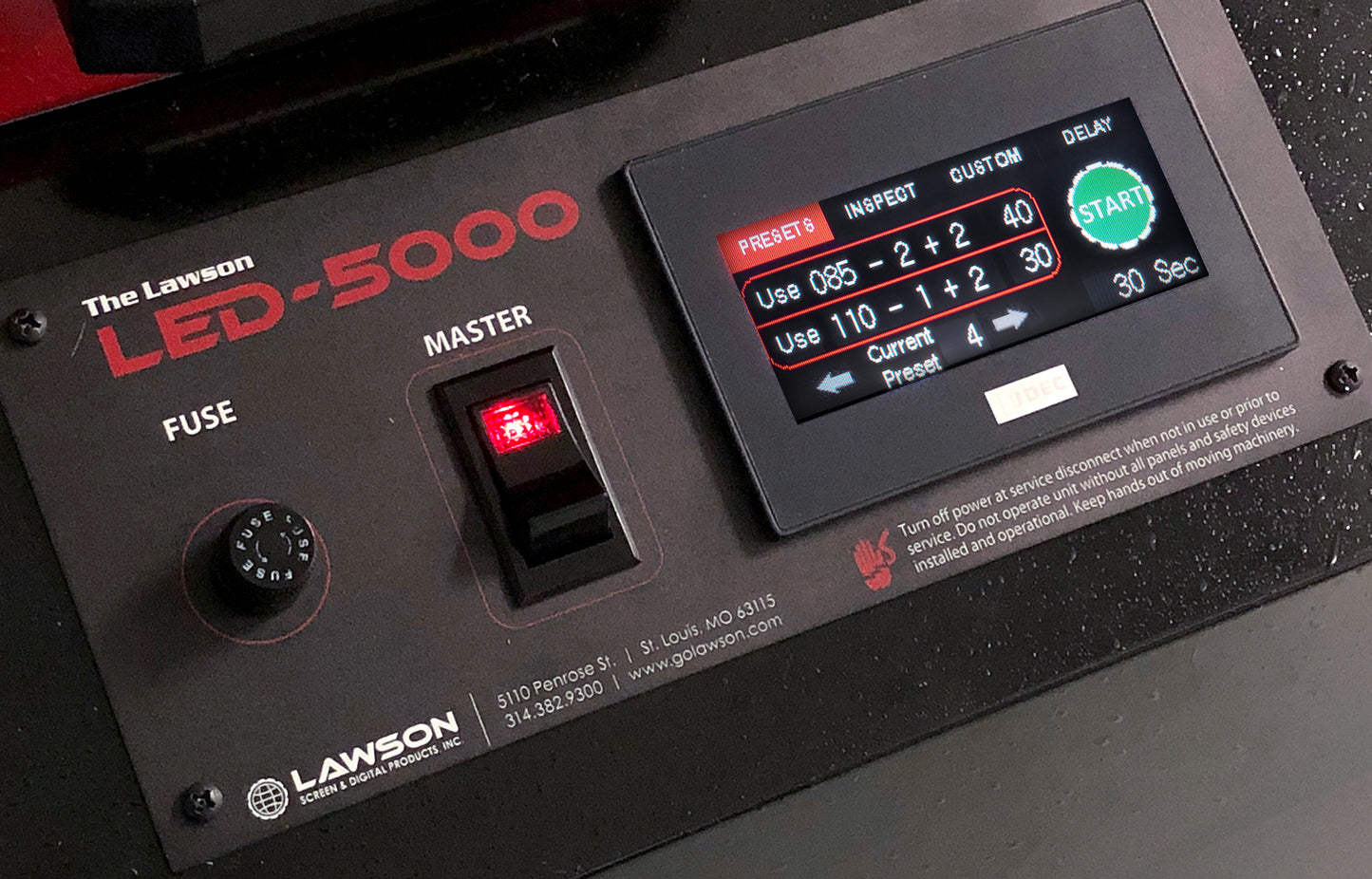
The programmable touchscreen lets you set custom exposure times so you can dial-in the perfect exposure based on your unique needs, like emulsion type, emulsion thickness/emulsion-over-mesh (EOM), mesh count and more. Our LED-5000s now feature built in inspection lights that turn on/off with the push of a button.
The LED-5000 simulates a powerful 5,000 watt metal halide while being energy-efficient, easy to use, and reliable. This rich UV output produces great fine-line and halftone exposure without undercutting. The UV LED lights are guaranteed for 3 years, and have a 50,000+ hour life expediency. See for yourself why screen printers have been choosing Lawson since 1949.
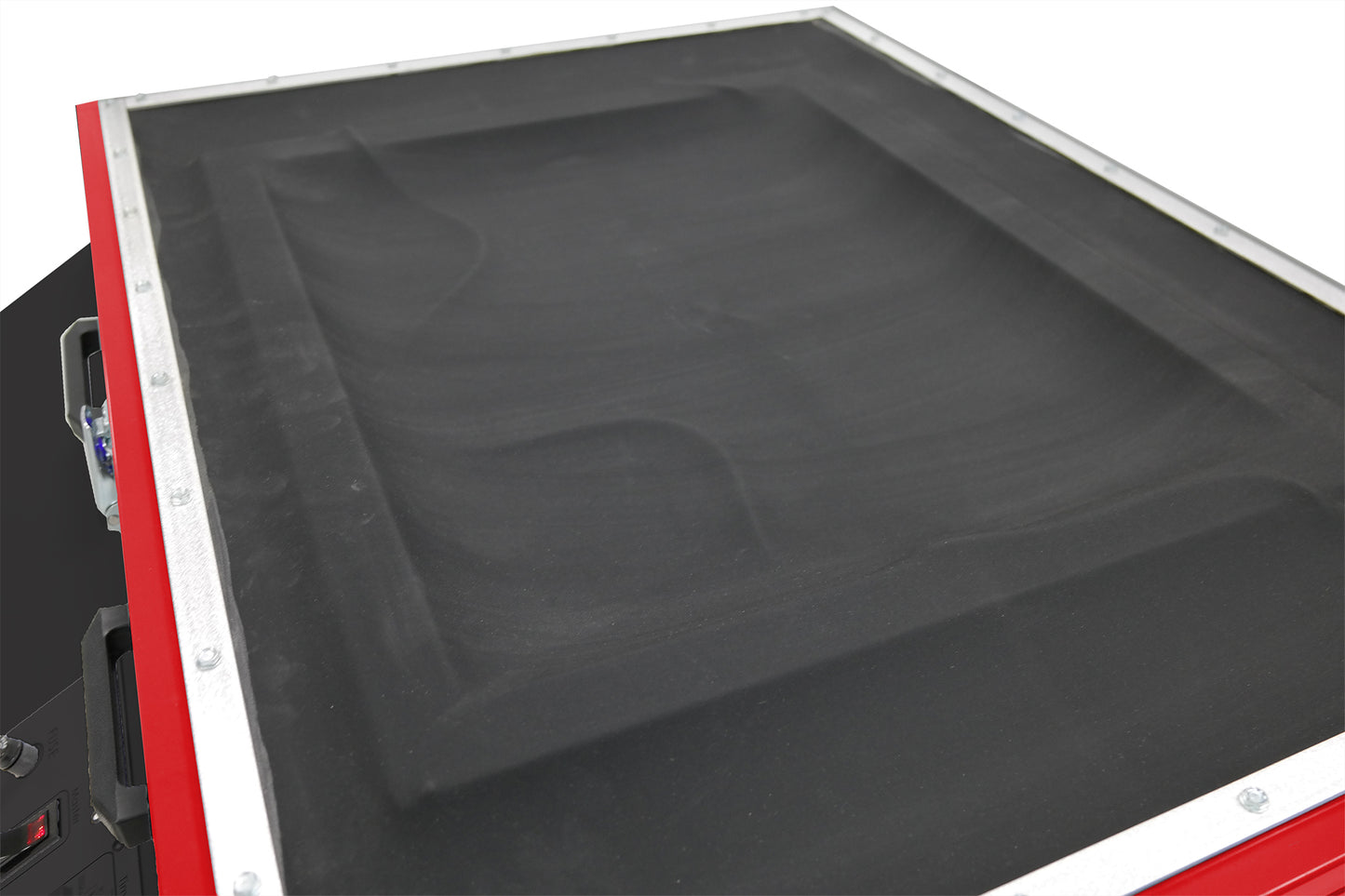
The vacuum frame features a black rubber-flex blanket formulated to resist tearing and pinholes, yet is extremely flexible to conform to the smallest contour, giving firm vacuum contact. A powerful 1.25 horsepower vacuum motor provides instant vacuum draw-down and immediate film-to-screen contact. The hinged frame has a hydraulic gas lifter to facilitate easy raising and lowering of the top.
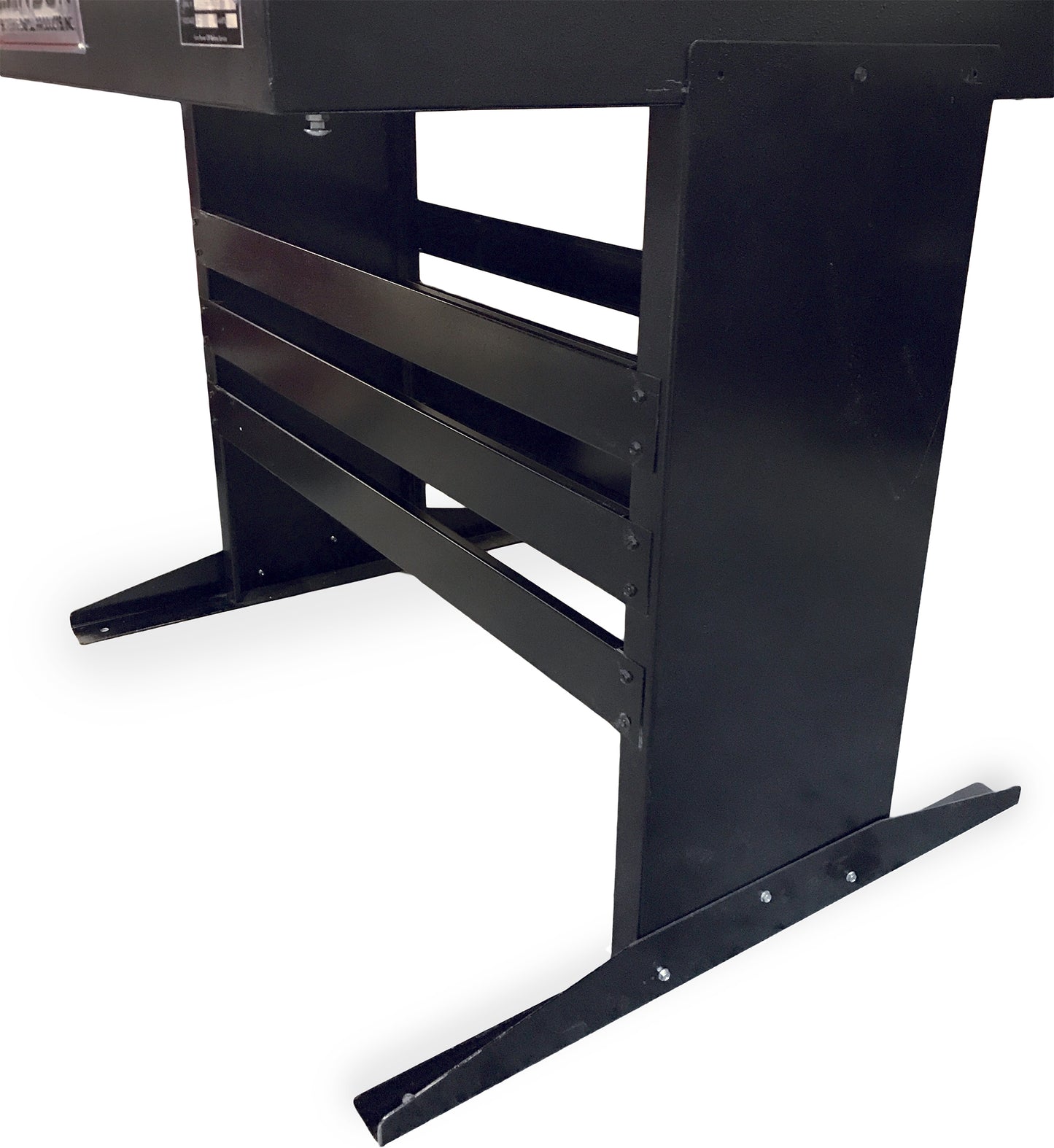
Optional stand is available or just place the unit on a table. If you are a graphic, ASI or poster printer, we recommend getting the vacuum pump option.
For graphic printers, and garment printers wanting the ultimate in performance, add the optional vacuum pump. With a vacuum tight seal, you get razor-sharp edges and the ability to hold incredibly fine halftones.
Key Advantages of the Lawson LED-5000 Screen Printing Exposure Unit:
- Fast exposure times: LED lights provide rapid exposure, significantly reducing screen exposure time compared to other choices.
- High resolution and sharp edges: The LED light source ensures consistent and accurate exposure for detailed designs and fine halftones.
- Energy efficiency: LED technology consumes considerably less energy than traditional metal halide bulbs.
- Easy to use: Simple controls with a programmable touchscreen make operation straightforward.
- Durable and reliable: Designed with high-quality components for long-lasting performance.
- Cost-effective: Offers a good value for the features and quality it provides compared to other exposure units.
- Wide compatibility: Works well with all screen printing emulsions.
- Vacuum system: Powerful vacuum ensures good film-to-screen contact for precise exposure.
- Service and support: U.S. based support for technical and print support help.
Custom Sizes, Features & Options Available Upon Request


Technical FAQ: Choosing the Right Screen Printing Mesh Count
What mesh count is best for printing glitter and shimmer inks?
Use a low mesh count between 24 and 86 for glitter and shimmer inks. Larger glitter flakes require very open meshes such as 24/25, 38/40, or 60/61 to allow particles to pass through without clogging. For finer shimmer inks or foil adhesives, an 85/86 mesh provides better control while still allowing adequate ink flow.
Why is 110 mesh commonly used in garment screen printing?
A 110 mesh count is widely used because it delivers a heavy ink deposit, making it ideal for bold graphics, block text, and high-viscosity plastisol inks. It is especially effective for white underbases, allowing printers to achieve strong opacity in a single pass and improve production efficiency.
What mesh count should I use for thick white plastisol ink?
A 125 mesh count is a strong choice for thick white plastisol inks. It balances ink flow and detail, offering slightly finer resolution than 110 mesh while still maintaining enough openness to prevent clogging or poor ink release.
What is the best all-purpose mesh count for t-shirt printing?
A 156/160 mesh count is considered the best general-purpose option for screen printing on garments. It works well with both plastisol and water-based inks, providing good detail retention while maintaining consistent ink coverage across most designs.
How can I achieve a soft-hand feel when printing with plastisol ink?
To create a softer print with plastisol ink, use a higher mesh count such as 196/200. This reduces the amount of ink deposited on the garment, resulting in a lighter, smoother feel. Keep in mind that higher mesh counts may reduce opacity, making this approach best for lighter fabrics or fashion prints.
What mesh count is ideal for halftones and fine detail printing?
A 230 mesh count is ideal for halftones, fine lines, and detailed artwork. It allows for precise stencil definition and clean ink transfer. For very fine detail or thinner inks, a 280 mesh count can further improve sharpness and control.
When should I use a 305 mesh screen for screen printing?
A 305 mesh count is best for ultra-fine detail, including small halftone dots, CMYK process printing, and simulated process designs. The higher thread count ensures accurate dot reproduction and prevents distortion, resulting in sharper, more professional prints.