

Squeegee Blade Material 80 Durometer
Squeegee Blade Material 80 Durometer
Couldn't load pickup availability
Payment & Security

Your payment information is processed securely. We do not store credit card details nor have access to your credit card information.
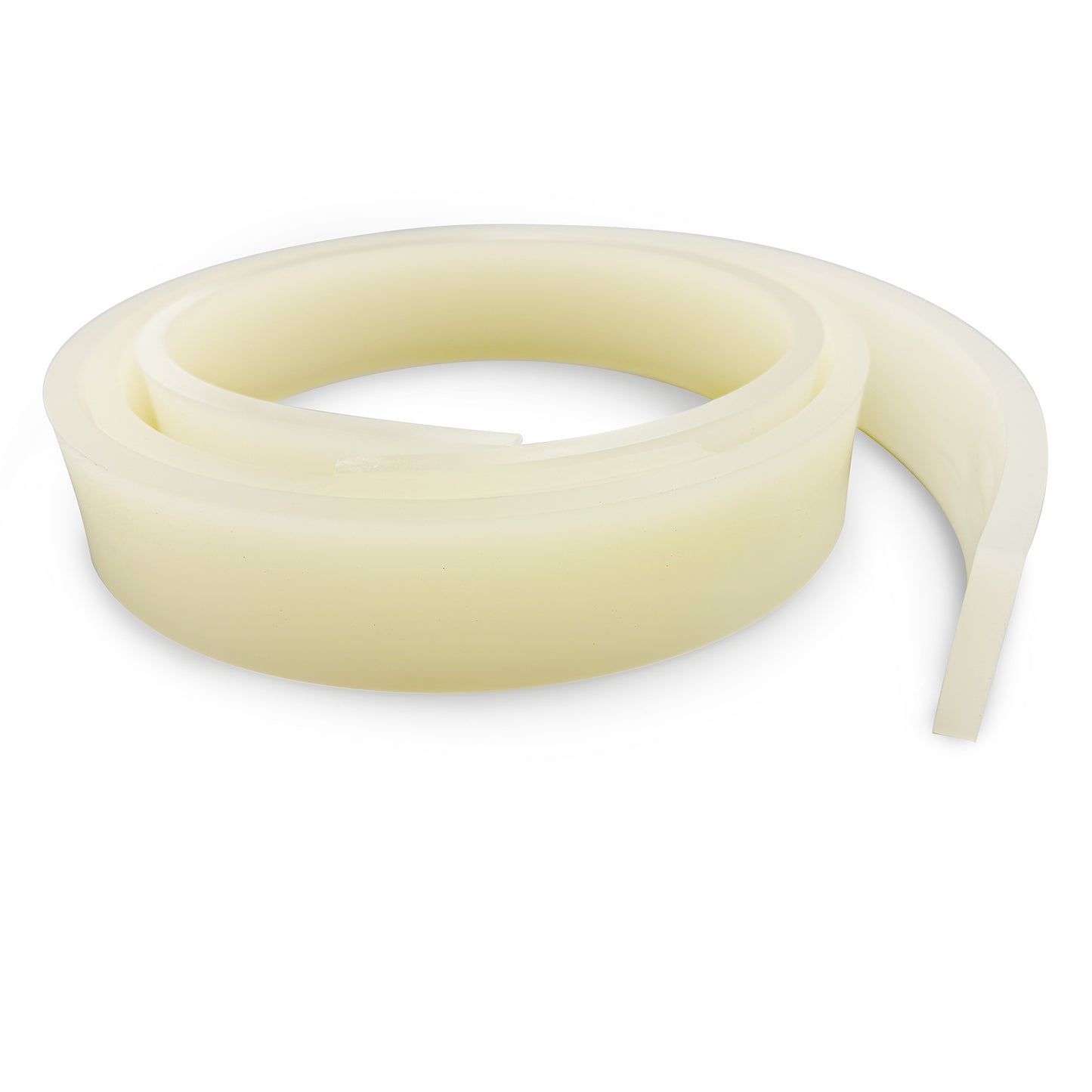
- DESCRIPTION
Squeegee Blade Material 80 Durometer | By the Inch or Roll
Lawson Workhorse Group (LWG)'s 80-durometer squeegee blade material is a durable, low-flex screen printing squeegee rubber. This premium polyurethane rubber is designed for screen printers seeking the best squeegee blade for manual and automatic printing, particularly for UV ink applications.
Available by the inch or in a full roll (144 inches/12 feet) to suit your needs.
Lawson Workhorse Group (LWG)'s polyurethane squeegee blade material is formulated to resist abrasion and screen printing chemicals. It can be used with manual or automatic screen printing handles made from wood or aluminum. This high-quality squeegee blade rubber can be sharpened with a squeegee sharpener.
Available in single, dual, and triple durometer options.
How Do I Choose the Right Durometer? Selecting the best durometer (hardness) for your screen printing squeegee is crucial for achieving a high-quality print. Use this guide to select the optimal durometer for your needs.
- 60 Durometer: The softest option, flexing the most. Ideal for depositing a thicker layer of ink.
- 70 Durometer: The most popular and versatile choice, suitable for most applications. If unsure, choose a 70-durometer squeegee for reliable results.
- 80 Durometer: The strongest and least flexible, typically used for UV (ultraviolet) ink printing.
How Do I Maintain My Squeegee? Achieving the best screen print depends heavily on proper squeegee and blade maintenance. Rotate your squeegees to ensure even wear on both the squeegee and blade edges. A sharp edge is essential for optimal results. Always clean your squeegee and wipe it dry after use to prevent warping.
How Should I Store My Squeegee? Store squeegees in a dry environment, out of direct sunlight, ideally at room temperature. For finished squeegees (handle and blade), store them flat to avoid stress on the blade material. Do not store them standing on the squeegee blade.
- Choosing a selection results in a full page refresh.
- Opens in a new window.