
-
Vendor:DTF Station
Aries 213 - 13" UV DTF Printer
Regular price $17,103.95 USDRegular priceUnit price per -
Vendor:DTF Station
Aries 124 – 24" UV DTF Printer
Regular price $29,224.24 USDRegular priceUnit price per -
Vendor:Epson
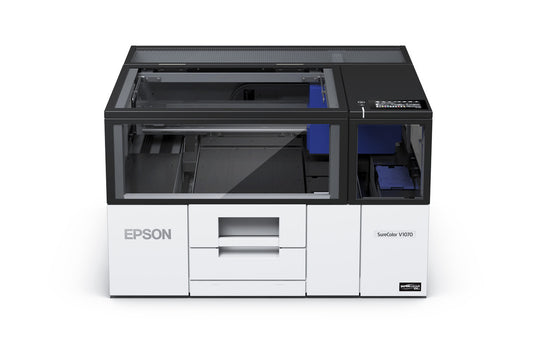
EPSON SureColor V1070 Desktop UV Flatbed Printer
Regular price $9,299.00 USDRegular priceUnit price per


UV DTF Printing: Frequently Asked Questions
What is the difference between UV DTF and standard DTF?
Standard DTF is designed for textiles (t-shirts, hoodies) and requires a heat press. UV DTF is designed for "hard surfaces" like glass, metal, and wood. It uses UV-curable ink and does not require heat for application—you simply "peel and stick" the decal onto the substrate.
Do I need a laminator for UV DTF printing?
Yes. UV DTF is a two-step process. After the Aries 213 or Aries 124 prints onto the "A" film, a laminator is used to apply the "B" adhesive film. Many professional UV DTF printers have an integrated laminator to automate this process in one pass..
How durable are UV DTF decals?
UV DTF transfers are incredibly durable. They are water-resistant, scratch-resistant, and offer high UV light resistance, making them ideal for items like water bottles, electronics, and outdoor signage..
Can the EPSON V1070 be used for UV DTF?
The EPSON SureColor V1070 is a desktop UV flatbed printer. While its primary strength is printing directly onto objects (like phone cases or golf balls), it can be used to create UV DTF transfers by printing onto specialized film and laminating it afterward.
What surfaces can I apply UV DTF transfers to?
- Glass & Ceramics (Mugs, jars, windows)
- Metals (Stainless steel tumblers, aluminum panels)
- Plastics & Acrylics
- Wood & Finished Leather