Maxi Press Air - Large Format Automatic Heat Transfer Press
Shipping Fees Not Included in Price
Shipping and Crating fees (if applicable) are not included in price shown and will not be reflected in your order total. Lawson will contact you after order completion with a shipping cost.
Couldn't load pickup availability
Payment & Security
Your payment information is processed securely. We do not store credit card details nor have access to your credit card information.
- DESCRIPTION
- REVIEWS
Maxi Press Air - Large Format Automatic Heat Transfer Press | A Must Have
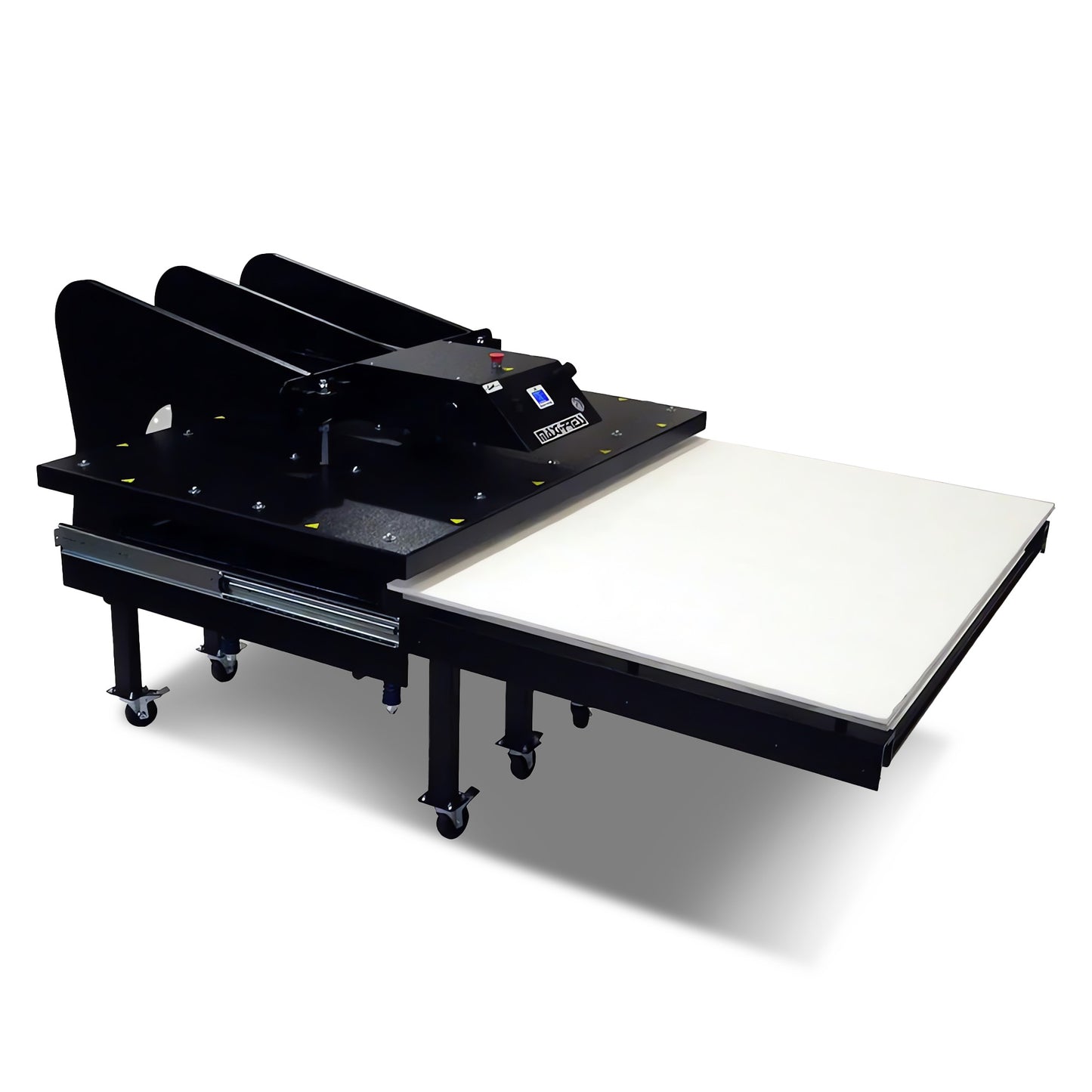
The MAXI PRESS AIR is an Automatic large format heat transfer press intended for more automated and higher pressure needs than the Manual version. The MAXI PRESS AIR provides an over-sized platen & a better production-oriented press with a single front loading table and high pressure pneumatic lifting system.
This pressure system is powered by a dual air-bag, 10-ton, 20,000 lbs max force self leveling mechanism. The press is activated with a push of a button, and automatically releases at the end of the timing cycle. The front console features the Digital Knight control, regulating digital temperature and digital automatic timing control, as well as full air pressure regulation.
The heavy steel triple reinforced welded C-Frame design is built to withstand a lifetime of intense pressing and automatic operation, and allows for full draping of materials over the front, left and right sides of the press, without hindrance. For a large format heavy pressure automatic press that is one step below the larger industrial 931 Triton machines, the MAXI PRESS AIR is the solution.
The Maxi Press AIR models are priced simply by heater block size. The list below notes the most common sizes and their respective pricing.
716-117-2-EA (32" x 42")
(Weight: 2250 lbs Box Dimensions: 48" x 84" x 55")
716-117-4-EA (44" x 64")
(Weight: 2750 lbs Box Dimensions: 84" x 84" x 55")
Features
- Available in Single shuttle (standard) or Dual loading table format (optional)
- SuperCoil-Microwinding™ heater technology
- Ultra thick heater block assembly
- Solid steel pressure bars
- Heavy steel frame structures
- 20,000 lbs force, 10-ton air bag lift mechanism
- Self leveling pressure system
- Solid lower platen base
- Solid loading bed with ultra thick nomex padding
- Dual button easy-activate safety circuit
- Heavy duty locking casters for easy mobility and solid foundation support
- Automatic press, release, temp & timer controls
- Full one year warranty on heating element, controls and entire press
- 208/220/240 Volt, (30x40-Single Phase) (40x64-Single Phase)- Air required
*Shipping Charges Are Not Included In the Price Shown & Will NOT Be Reflected In Your Order's Total -- Quote on Request
Technical FAQ: Choosing the Right Screen Printing Mesh Count
What mesh count is best for printing glitter and shimmer inks?
Use a low mesh count between 24 and 86 for glitter and shimmer inks. Larger glitter flakes require very open meshes such as 24/25, 38/40, or 60/61 to allow particles to pass through without clogging. For finer shimmer inks or foil adhesives, an 85/86 mesh provides better control while still allowing adequate ink flow.
Why is 110 mesh commonly used in garment screen printing?
A 110 mesh count is widely used because it delivers a heavy ink deposit, making it ideal for bold graphics, block text, and high-viscosity plastisol inks. It is especially effective for white underbases, allowing printers to achieve strong opacity in a single pass and improve production efficiency.
What mesh count should I use for thick white plastisol ink?
A 125 mesh count is a strong choice for thick white plastisol inks. It balances ink flow and detail, offering slightly finer resolution than 110 mesh while still maintaining enough openness to prevent clogging or poor ink release.
What is the best all-purpose mesh count for t-shirt printing?
A 156/160 mesh count is considered the best general-purpose option for screen printing on garments. It works well with both plastisol and water-based inks, providing good detail retention while maintaining consistent ink coverage across most designs.
How can I achieve a soft-hand feel when printing with plastisol ink?
To create a softer print with plastisol ink, use a higher mesh count such as 196/200. This reduces the amount of ink deposited on the garment, resulting in a lighter, smoother feel. Keep in mind that higher mesh counts may reduce opacity, making this approach best for lighter fabrics or fashion prints.
What mesh count is ideal for halftones and fine detail printing?
A 230 mesh count is ideal for halftones, fine lines, and detailed artwork. It allows for precise stencil definition and clean ink transfer. For very fine detail or thinner inks, a 280 mesh count can further improve sharpness and control.
When should I use a 305 mesh screen for screen printing?
A 305 mesh count is best for ultra-fine detail, including small halftone dots, CMYK process printing, and simulated process designs. The higher thread count ensures accurate dot reproduction and prevents distortion, resulting in sharper, more professional prints.