Maintaining an efficient, eco-friendly screen room is essential for maximizing press uptime and reducing chemical usage in high-volume screen printing operations. Manual chemical application with household power washers leads to overspray, chemical waste, and incomplete emulsion reclamation, resulting in pinholes and ghost images on fresh prints. Sourcing industrial-grade screen cleaning equipment streamlines ink degradation, emulsion stripping, and frame degreasing into a clean, contained workflow.
Heavy-Duty Washout Booths & Water Recirculation Technology
Lawson Workhorse Group (LWG) supplies stainless steel and poly washout stations, filtration tanks, and automated dip tanks engineered to keep your reclaim room running at peak efficiency:
- Backlit Stainless & Poly Washout Booths: Enjoy maximum visual clarity while reclaiming fine mesh screens with illuminated, splash-contained stations like the Stainless Steel Backlit Washout Booth and Polypropylene Washout Sinks.
- Closed-Loop Filtration & Recirculation: Meet municipal wastewater compliance and reduce chemical expenditures by pairing reclaim sinks with the Lawson Recirculating System to filter solids and reuse cleaning solutions.
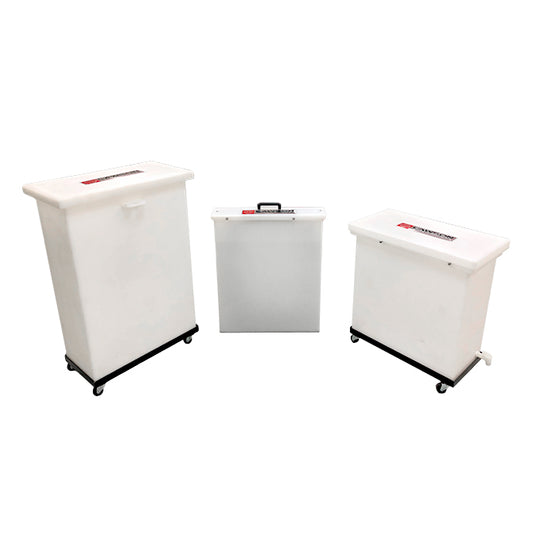
- Batch Emulsion Stripping Dip Tanks: Soften toughest photopolymer and dual-cure emulsions simultaneously across multiple frames using heavy-duty poly dip tanks like the Lawson Screen Dip Tank System.
- Auto-Rotary Screen Washing: Automate continuous screen washing and solvent application for multi-shift production environments with dedicated automated cleaning stations.
All screen cleaning machinery, washout sinks, and filtration systems purchased through Lawson Workhorse Group come backed by manufacturer warranties and fast shipping out of facilities in St. Louis, MO, and Atlanta, GA.
Screen Cleaning Equipment: FAQ
What is the benefit of a backlit washout booth compared to a standard sink?
Backlit washout booths feature built-in waterproof backlighting that illuminates screen mesh from behind. This allows technicians to instantly see unexposed emulsion during washout and catch tiny emulsion specks or haze during reclaiming before screens head to press.
Why should my shop use a chemical dip tank for screen reclaiming?
Screen dip tanks allow operators to soak multiple screens at once in concentrated chemical solutions. Soaking breaks down ink and emulsion evenly across all frames, reducing manual pressure washing time per screen by over 50% while drastically cutting overall chemical consumption.
How does a water recirculating system help with wastewater compliance?
A recirculating system filters out ink solids, emulsion sludge, and screen debris while reusing cleaning chemicals. This prevents hazardous chemicals and solids from flushing directly into municipal drain lines, helping print shops comply with local environmental regulations.
What material is best for screen printing washout sinks: stainless steel or polypropylene?
Both materials offer excellent durability. Stainless steel sinks provide rugged, industrial strength for heavy usage, while polypropylene sinks offer rust-proof, chemical-resistant construction that withstands harsh reclaim solvents over years of daily use.
Does Lawson provide technical support and installation guidance for screen cleaning systems?
Yes. Lawson Workhorse Group provides complete facility planning, equipment installation support, and USA-based technical assistance out of our distribution centers in St. Louis, MO, and Atlanta, GA.


 Vendor:Lawson Workhorse Group (LWG)
 Vendor:Lawson Workhorse Group (LWG)
 Vendor:Workhorse Products
 Vendor:Lawson Workhorse Group (LWG)
 Vendor:Lawson Workhorse Group (LWG)
 Vendor:Lawson Workhorse Group (LWG)
 Vendor:Lawson Workhorse Group (LWG)
 Vendor:Lawson Workhorse Group (LWG)
 Vendor:Lawson Workhorse Group (LWG)
 SaleVendor:Lawson Workhorse Group (LWG)
 Vendor:Lawson Workhorse Group (LWG)
 Vendor:Lawson Workhorse Group (LWG)
 SaleVendor:Lawson Workhorse Group (LWG)
 Vendor:Lawson Workhorse Group (LWG)
 Vendor:Lawson Workhorse Group (LWG)


