
-
Vendor:Lawson Screen & Digital Products
Mini-Max Automatic Screen Printing Press
Regular price Contact SalesRegular priceUnit price per -
Vendor:Lawson Screen & Digital Products
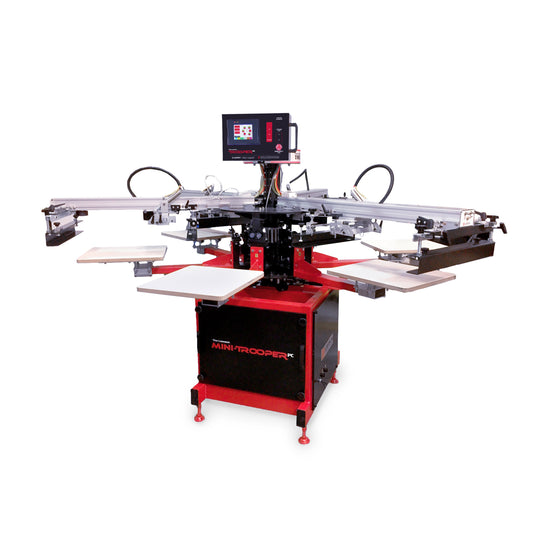
Mini-Trooper Automatic Screen Printing Press
Regular price Contact SalesRegular priceUnit price per -
Vendor:Lawson Screen & Digital Products
Express EX Automatic Screen Printing Press
Regular price Contact SalesRegular priceUnit price per -
Vendor:Workhorse Products
Workhorse Sabre Automatic Screen Printing Press
Regular price Contact SalesRegular priceUnit price per -
Vendor:Lawson Screen & Digital Products
Trooper Automatic Screen Printing Press
Regular price Contact SalesRegular priceUnit price per -
Vendor:Lawson Screen & Digital Products
Mini-Printer M-Series
Regular price Contact SalesRegular priceUnit price per -
Vendor:Lawson Screen & Digital Products
Mini Printer-ASI
Regular price Contact SalesRegular priceUnit price per -
Vendor:Lawson Screen & Digital Products
Trooper Express Automatic Screen Printing Press
Regular price Contact SalesRegular priceUnit price per -
Vendor:Lawson Screen & Digital Products
Companion Bag Take-Off
Regular price Contact SalesRegular priceUnit price per -
Vendor:DCC
Copperhead Flex Plus Automatic Press
Regular price Contact SalesRegular priceUnit price per -
Vendor:DCC
Copperhead Icon Automatic Press
Regular price Contact SalesRegular priceUnit price per -
Vendor:DCC
Copperhead Infinity Automatic Press
Regular price Contact SalesRegular priceUnit price per -
Vendor:DCC
Copperhead Intel Automatic Press
Regular price Contact SalesRegular priceUnit price per -
Vendor:DCC
Copperhead Matrix Di4.0 Automatic Screen Press
Regular price Contact SalesRegular priceUnit price per -
Vendor:DCC
Copperhead ProMax Automatic Press
Regular price Contact SalesRegular priceUnit price per -
Vendor:DCC
Copperhead ProMini Automatic Press
Regular price Contact SalesRegular priceUnit price per -
Vendor:DCC
Copperhead Rival Automatic Press
Regular price Contact SalesRegular priceUnit price per -
Vendor:DCC
Copperhead Speedmaster Automatic Press
Regular price Contact SalesRegular priceUnit price per -
Vendor:DCC
Copperhead Intel OS Automatic Press
Regular price Contact SalesRegular priceUnit price per -
Vendor:DCC
Copperhead Speedmaster OS Automatic Screenprinting Press
Regular price Contact SalesRegular priceUnit price per



Why Choose Lawson Automation?
Made in the USA: Our Lawson-branded presses, like the Trooper Express, are engineered and supported right here in America.
Turn-Key Setup: We don't just ship a crate; we provide the Classes and Financing programs, your new automatic press can literally pay for itself through the increased capacity it creates.
Flexible Growth: With our Financing programs, your new automatic press can literally pay for itself through the increased capacity it creates.
Scalable Automation for Growing Print Shops
Transitioning from manual to automatic printing is the most effective way to increase your shop's profitability. Lawson’s line of automatic presses, including the Mini-Max and the Mini-Trooper, are designed to provide professional-grade consistency with a smaller footprint. Whether you are looking for the precision of the Workhorse Sabre or the high-speed output of the Copperhead Series, Lawson provides the technology and 24/7 support to help you scale.
Automatic Screen Printing: Frequently Asked Questions
What is the best automatic screen printing press for a small shop?
The Mini-Max Automatic Press is our most popular choice for space-constrained shops. It is designed to fit through a standard 36-inch door while providing the high-speed production and consistency of a full-sized industrial machine.
How much faster is an automatic press compared to manual printing?
An operator on an automatic press like the Mini-Trooper can typically print 400–500 shirts per hour, whereas a manual printer averages 50–100. This 5x increase in speed significantly lowers your cost-per-print and allows you to take on much larger contracts.
Do I need special power or air requirements for an automatic press?
Requirements vary by model. Some of our "all-electric" heads require standard power, while others require a dedicated air compressor to run the pneumatic components. For example, the Workhorse Sabre features electric indexing for smooth, quiet operation. We provide full facility requirement guides prior to installation.
Does Lawson provide training for new automatic press owners?
Yes. Every Lawson automatic press purchase includes professional training. We ensure your team understands the Mini-Printer M-Series or any other model you choose, covering everything from setup and registration to maintenance and troubleshooting.
Can I finance an automatic screen printing machine?
Absolutely. We offer flexible Financing Options to help businesses transition from manual to automatic production without a massive upfront capital expenditure. This allows the machine to "pay for itself" through increased monthly production.