Commercial Screen Printing Flash Cure Units & Spot Dryers
An industrial screen printing flash cure unit (or spot dryer) is essential for gelling and flashing ink layers between color applications or before final conveyor curing. Proper spot drying prevents ink blending on multi-color jobs, sharpens print detail, and maintains consistent production speed across manual and automatic screen printing presses.
Choosing the Right Flash Dryer for Your Shop
Selecting the best flash cure unit depends on your press type, available shop power, production speed, and ink chemistry:
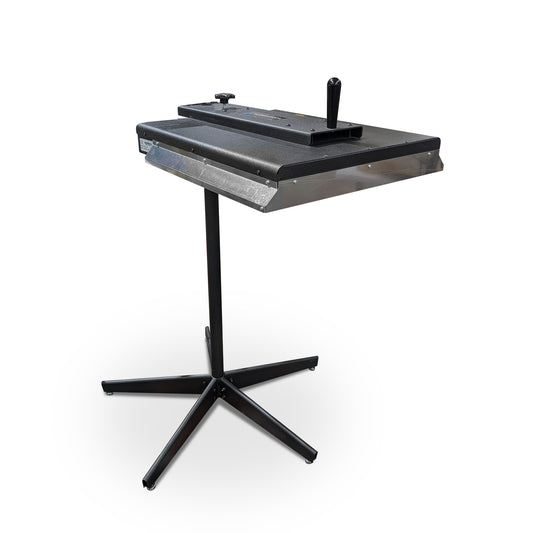
- Infrared (IR) Flash Dryers: Deliver reliable, continuous radiant heat. Simple and dependable models like the Econo Flash Unit and Super Flash Unit are top choices for manual screen printing shops.
- Instant-On Quartz Flash Units: Utilize smart sensor controls that heat up instantly only when a garment is present on the platen. High-efficiency systems like the Quartz Express Instant-On Flash reduce ambient shop heat and lower electricity usage in high-speed automatic production.
- Shuttle & Automatic Flashes: Advanced units such as the QZE-Quartz Shuttle Flash Unit offer precise dwelling controls for heat-sensitive performance fabrics and specialty inks.
All Lawson Workhorse Group (LWG) flash dryers feature heavy-duty construction and are backed by nationwide technical support, direct sales, equipment financing, and hands-on screen printing training out of primary facilities in St. Louis, MO, and Atlanta, GA.
Flash Units: FAQ
What is a flash cure unit used for in screen printing?
A flash cure unit uses controlled radiant heat or quartz elements to partially cure ("flash") or gel wet ink layers between colors during multi-color printing, preventing colors from smearing on subsequent screens.
What is the difference between infrared and quartz flash units?
Infrared (IR) flash dryers emit continuous heat and are ideal for manual presses and steady production runs. Quartz flash units use smart optical sensors to turn on instantly only when a platen passes underneath, saving energy and keeping the shop cooler—making them ideal for automatic presses.
Should I choose a 120V or 220V flash dryer?
120V flash units work well in smaller shops or entry-level manual setups with standard wall outlets. 220V flash units provide faster element warm-up times, broader heat coverage, and higher output required for commercial, high-volume printing.
Can flash units be integrated into automatic presses?
Yes. Models like the Quartz Express, QZE Shuttle, and Workhorse Sabre Quartz are designed specifically for seamless integration with automatic screen printing presses.
What inks work best with flash dryers?
Flash cure units gel plastisol, water-based, discharge, and specialty inks (such as high-density or silicone inks) on cotton, polyester, and performance blends.
Does LWG offer custom flash dryer sizes or builds?
Yes. Lawson Workhorse Group provides custom sizes, specialized power configurations, and custom heating elements tailored to fit unique manufacturing layouts and production requirements.

 Vendor:Lawson Workhorse Group (LWG)
 Vendor:Lawson Workhorse Group (LWG)
 Vendor:Lawson Workhorse Group (LWG)

 Vendor:Workhorse Products
 Vendor:DCC
 Vendor:DCC


