


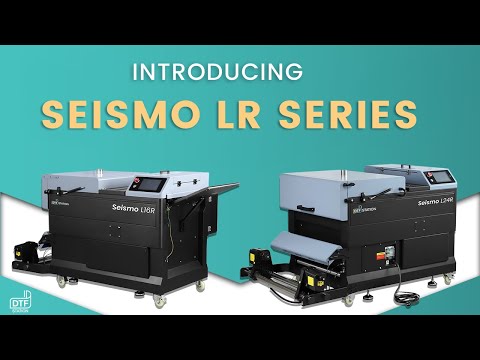
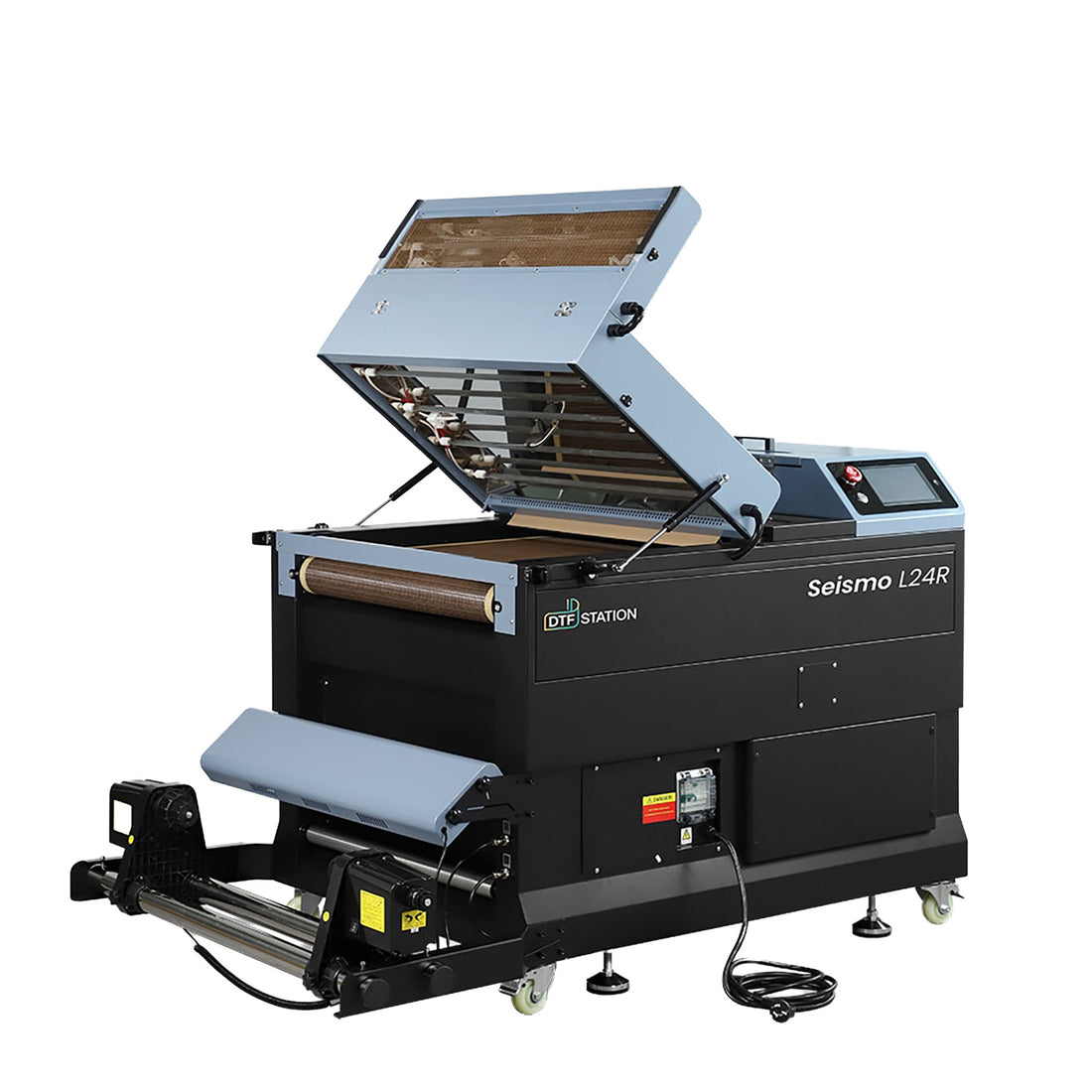
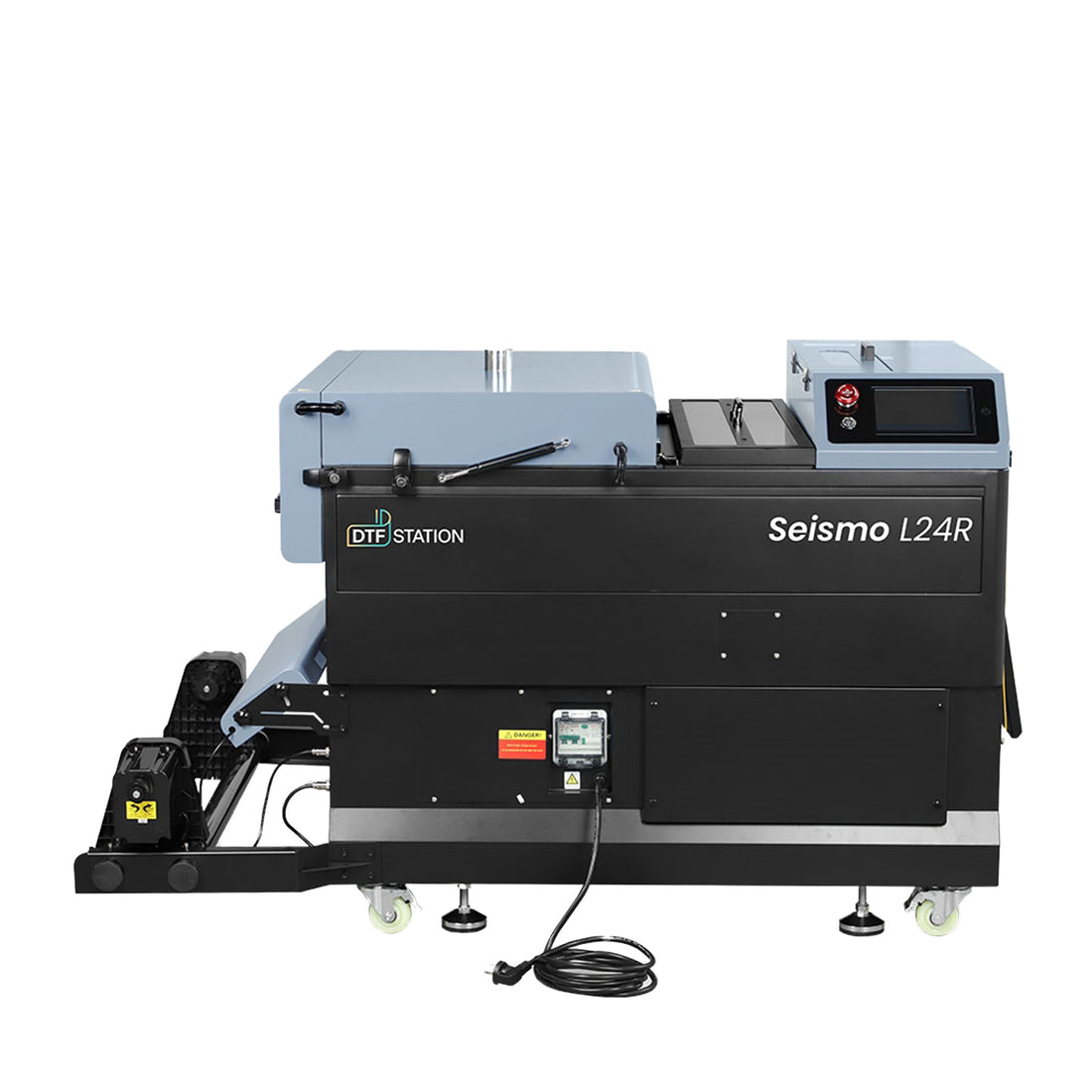
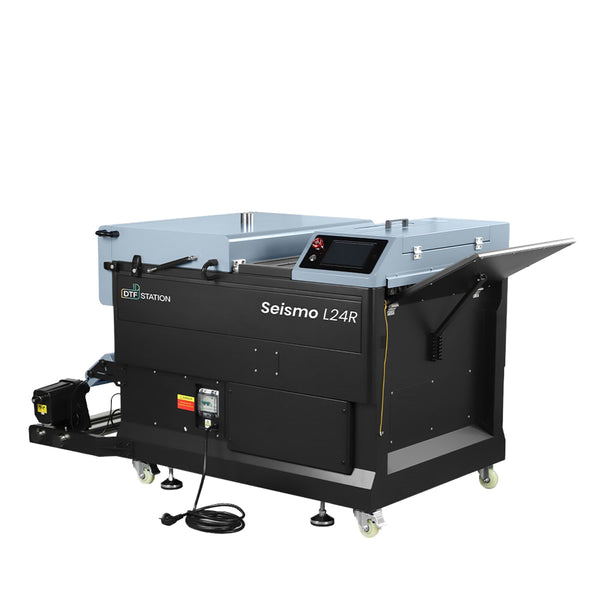
Seismo L24R DTF Powder Applicator and Dryer
Seismo L24R DTF Powder Applicator and Dryer
Regular price
$7,995.00 USD
Regular price
$0.00 USD
Sale price
$7,995.00 USD
Unit price
per
Couldn't load pickup availability
Payment & Security

Your payment information is processed securely. We do not store credit card details nor have access to your credit card information.

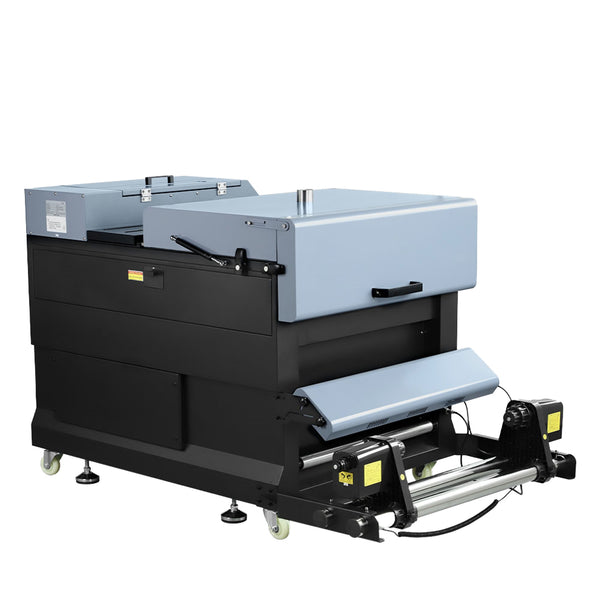
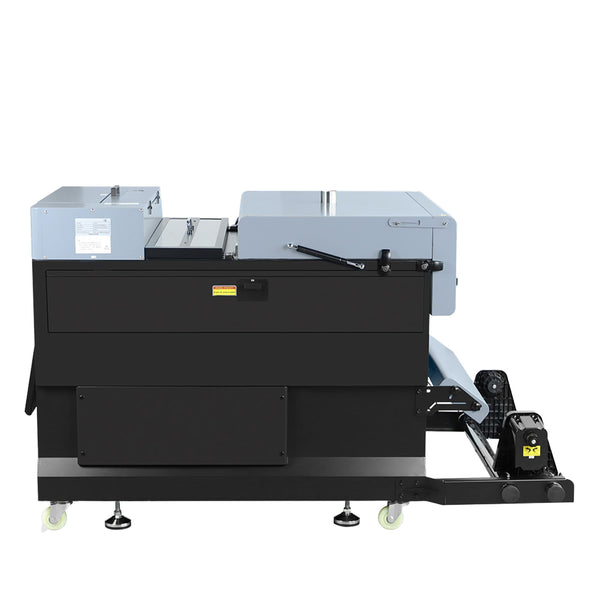
Description
The LWG Difference
Features
Media & Videos
Specifications Table
| MODEL NAME | Seismo L24R |
|---|---|
| Max Film Width | 60cm (24″) |
| Powder Volume | 4 kg (8.8 lb) |
| Powder Recycling | Every 4 to 5 hours manually (keep printing) |
| Power Requirements | 5200W/220V/23.6A |
| Powder Filling Box | YES |
| Powder Collection Drawer | NO |
| Product Weight | 190 kg (418.9 lb) |
| Packaging Weight | 240 kg (529.1 lb) |
| Machine Dimensions | 162cm × 91.2cm × 99.2 cm (63.8″W × 35.9″D × 39.1″H) |
| Packaging Dimensions | 142cm × 112cm × 113.6cm (55.9″W × 44.1″D × 44.7″H) |
| Warranty | One year warranty |
| Structure | 1. Self-developed control system with DTF Station logo and a sensor system to keep the shaker running at a lower power consumption while maintaining stable curving quality. 2. Self-developed auto-recirculating system. 3. Conveyor and suction system for easier initial film feeding. |
| Reason to Develop This Model | The Seismo L24R was developed to enable fewer people to run more machines. The goal was to create an auto-recirculation system that was not only easy to use but also stable and easy to maintain. This model is user-friendly and requires minimal after-sales service, making it an ideal choice for dealers. |
| Daily Maintenance | The powder needs to be reloaded every 4 to 5 hours (based on 2 Epson I3200 heads keep printing). The machine is easy to clean before finishing daily work. |
| Compatible With | DTF Station Printers: Prestige XL2, Prestige XL2 Pro, Prestige XL3, Prestige XL4 |
| Other DTF printers | With a printer width less than 60cm |
| Suitable Users | DTF printing users with a printer width less than 60cm |
| Warranty Terms | 16 months from the date shown on the CE label. |
Comparison Table
| FEATURES | SEISMO L24R SHAKER & DRYER | SEISMO A24 DTF POWDER APPLICATOR AND DRYER WITH BUILT IN AIR PURIFIER | DTF STATION MIRO 24 DTF POWDER SHAKER AND DRYER |
|---|---|---|---|
| Target Production Level | Commercial 24" high-output roll-to-roll DTF production | High-speed 24" industrial manufacturing lines requiring built-in HEPA filtration | Mid-to-high volume 24" roll-to-roll DTF production |
| Max Media Width | 24 inches | 24 inches | 24 inches |
| Powder Application | Automated inline powdering with auto-recirculation | Automated inline powdering with auto-recirculation | Automated inline powdering |
| Air Purification Setup | External air purifier recommended/optional | Integrated 2-layer HEPA air purifier built-in | Built-in internal air purification system |
| Film Transport | Air vacuum conveyor belt | Air vacuum conveyor belt | Air vacuum conveyor bed |
| Best Fit | High-volume 24" print shops seeking heavy-duty automatic powder recycling and fast roll curing | Production lines needing max curing speed combined with built-in HEPA fume filtration | Mid-size 24" DTF operations seeking a compact footprint with integrated internal air filtration |